Summary
Microblading and microshading both use numbing to make the procedure more comfortable, but they create different sensations. Microblading typically feels like light scratching or scraping, while microshading is more often described as tapping, buzzing, or vibration. Neither is consistently more painful, as individual pain tolerance, skin sensitivity, numbing, and technician technique can affect the experience.
Healing discomfort is also similar for both, with mild tenderness, tightness, itching, and light flaking during the first few days. Understanding these differences can help you compare microblading vs microshading pain and choose the brow treatment that best fits your comfort level and desired look.
Microblading vs Microshading Pain: What to Expect
If you’ve been going back and forth between the two brow tattoo options, you’re probably asking the same question many first-time clients ask at their consultation: how does the pain of microblading compare with microshading? It’s a fair question, especially if you’ve never had a cosmetic tattoo before and the idea of a blade or needle near your eyebrows sounds intimidating.
The good news is that neither treatment is known for being unbearable. Most people describe the sensation as manageable rather than painful. Still, the two techniques feel different on the skin, and knowing what to expect can make the appointment much less stressful.
In this guide, we’ll break down how each technique feels, what affects your personal pain level, how the healing process compares, and which option may suit you if you’re especially sensitive to discomfort.
What Happens During Microblading
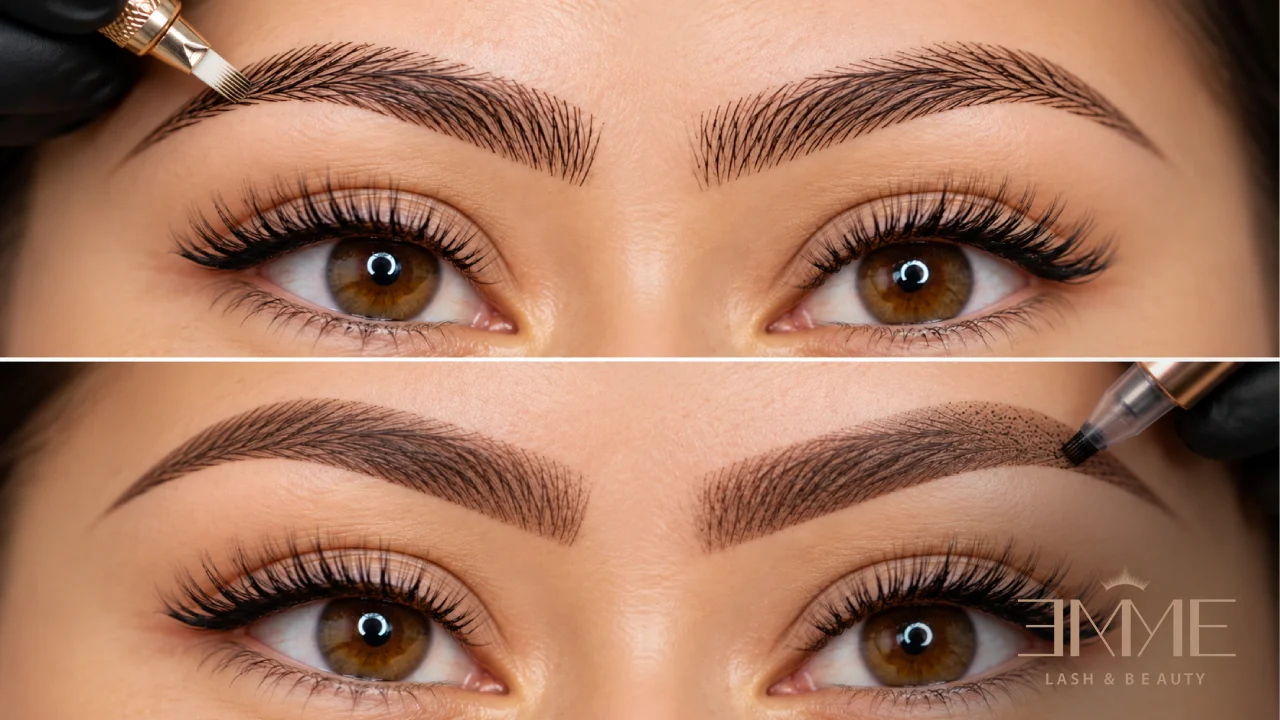
Microblading uses a handheld tool tipped with a row of tiny needles arranged like a blade. The technician uses this tool to create fine, hair-like strokes across the brow, depositing pigment into the upper layer of skin as they go.
Because each stroke is drawn by hand, the process is slower and more deliberate, which some clients find reassuring as they see the shape building gradually. When comparing microblading vs microshading pain, the main difference is usually the type of sensation rather than how intense it feels.
The Blading Sensation
Most clients describe microblading as a scratching or scraping feeling rather than sharp pain. Since the strokes are shallow and controlled, the sensation is closer to light scratches than a needle poking the skin. Some people compare it to eyebrow threading, minus the pulling.
This lines up with broader reporting on microblading discomfort, which generally describes the sensation as pressure or scratching rather than sharp pain when numbing cream is used correctly.
How Numbing Cream Changes the Experience
A topical numbing cream is applied to the brow area before the procedure and is usually left on for 20 to 30 minutes. This can make a significant difference in comfort. Once the numbing has taken effect, many clients feel pressure or vibration rather than significant pain.
Reputable studios may also keep additional numbing cream available during the appointment if sensitivity returns. Proper numbing can make a noticeable difference in the overall microblading vs microshading pain experience.
What Happens During Microshading
Microshading, sometimes called powder brows or ombré brows, uses a different tool. Instead of blading, the technician uses a fine needle attached to a small handheld device to deposit tiny dots of pigment into the skin.
Layer by layer, these dots create a soft, shaded finish that resembles filled-in brow makeup rather than individual hair strokes.
The Stippling Sensation
When comparing microblading vs microshading pain, the biggest difference is often the sensation itself. Microshading can feel like buzzing, tapping, or vibrating because of the repeated dots.
For some people, this repetitive motion feels more tolerable than the scraping sensation of microblading. Others may find the constant vibration more noticeable.
Why Some Clients Feel More Pressure With Microshading
Microshading can involve multiple passes to achieve a soft, powdery finish. Sessions may therefore feel longer for some clients. The extended appointment time, rather than the individual dots themselves, can contribute to greater overall discomfort.
Microblading vs Microshading Pain: Side-by-Side Comparison
| Factor | Microblading | Microshading |
| Tool used | Manual hand tool with fine blade | Handheld machine with a single needle |
| Sensation | Light scratching or scraping | Buzzing, tapping, or vibrating |
| Typical session length | 90–120 minutes | 90–150 minutes |
| Numbing effectiveness | Very effective, especially in the first hour | Very effective, though sessions may run longer |
| Reported pain level | Mild to moderate | Mild to moderate |
| Best suited for | Natural, feathered look | Fuller, powdered look |
As the comparison shows, neither technique is clearly more painful for everyone. The difference usually comes down to the type of sensation rather than intensity. Many clients rate both as mild to moderate once numbing cream has taken effect.
What Actually Determines How Much Pain You’ll Feel
Skin Sensitivity and Pain Tolerance
Everyone’s pain threshold is different. People with sensitive skin may experience more discomfort regardless of which technique they choose. If your skin tends to react strongly to waxing, threading, or tattoos, mention this during your consultation. If you’re particularly sensitive to discomfort, discussing microblading vs microshading pain with your PMU artist beforehand can help you prepare.
Numbing Cream Quality and Application Time
Not all numbing creams are created equal, and application time matters just as much as the product itself. Following the product’s recommended application time can help ensure the numbing has enough time to take effect.
The FDA has also warned that some over-the-counter numbing products marketed for tattooing contain lidocaine concentrations well above what’s considered safe for topical use. This is another reason to have numbing handled by a qualified professional rather than using an at-home product bought online.
Technician Skill and Experience
An experienced artist works efficiently, maintains consistent pressure, and knows when to pause or adjust the process if a client becomes uncomfortable. Rushed or inexperienced technique can increase discomfort and affect the final result.
This is one reason choosing a reputable, experienced studio matters for both comfort and results.
Time of Month and Hormonal Sensitivity
Some clients notice increased skin sensitivity during hormonal fluctuations, including around their menstrual cycle. If you know you are more sensitive during certain times of the month, you may prefer to schedule your appointment when you typically feel more comfortable.
Healing Discomfort: Which One Feels Worse Afterward?
The microblading vs microshading pain comparison doesn’t end when you leave the appointment. Both treatments involve a healing period, and the sensations are generally similar.
- Days 1–2: Brows may feel tender, tight, and slightly swollen.
- Days 3–5: Light scabbing or flaking can begin. Microshading may appear darker and more textured temporarily.
- Days 6–10: Itching is common as the skin continues healing. Avoid picking at scabs.
- Days 10–14: Color begins settling into its more natural shade, and most initial discomfort has resolved.
Overall, healing discomfort is quite similar between the two. Itching and tightness are generally more noticeable than significant pain.
Which One Should You Choose If You’re Especially Pain-Sensitive?
If you have a low pain threshold, microblading may feel gentler if you prefer shorter, more localized scratching sensations. On the other hand, people who dislike scratching may prefer the more consistent vibration of microshading.
There isn’t a universally less painful option. Your skin sensitivity, pain tolerance, artist’s technique, and numbing process all influence the experience. A consultation can help you understand what each treatment will feel like before making your choice.
If you’re also considering pairing your brow appointment with another service, some clients ask about combining a lash lift and brow lamination in the same visit. Similar scheduling considerations apply when planning multiple beauty treatments around your sensitivity levels.
Tips to Minimize Pain Before and After Your Appointment
- Avoid caffeine and alcohol for 24 hours before your session, since both can increase sensitivity and bleeding.
- Skip blood-thinning medication or supplements beforehand if your doctor approves, as thinner blood can make the skin more reactive.
- Arrive with a clean, makeup-free brow area so numbing cream can absorb properly.
- Follow your aftercare instructions closely, including avoiding moisture for the first 24 hours, to reduce irritation while the skin heals.
- Resist the urge to touch, scratch, or pick at the brows during the flaking stage.
Why Clients Choose EMME Lash Bar for Microblading and Microshading
At EMME Lash Bar, our PMU artists walk every client through a consultation before touching a single tool, so you know exactly what sensation to expect based on your skin and pain tolerance. We use professional-grade numbing cream, allow it the full recommended time to set in, and adjust technique and pacing throughout the appointment rather than rushing through a fixed schedule. If you’re weighing your options and want a second opinion in person, our artists at any EMME Lash Bar location in Newton, Burlington, Dedham, Brookline, Cambridge, or South Boston can assess your brow goals and recommend the technique that fits both your desired look and your comfort level.
For clients who decide a fuller, low-maintenance brow look is more their style before committing to a semi-permanent tattoo, our team can also walk you through brow lamination as a temporary alternative that lifts and shapes existing brow hair without any needles involved at all.
Conclusion
So, which is more painful: microblading or microshading? When looking specifically at microblading vs microshading pain, neither technique is dramatically more painful for most clients.
Microblading tends to feel more like light scratching, while microshading can feel more like steady buzzing or tapping. Both are generally manageable when appropriate numbing is used, and the procedure is performed by an experienced artist.
Ultimately, your personal pain tolerance, skin sensitivity, technician’s experience, and aftercare matter more than choosing one technique based on pain alone.
If you’re still unsure which option is right for you, book a consultation with EMME Lash Bar and let a PMU artist help you choose based on your skin, desired brow style, and comfort level. You can also browse the full list of lash and brow FAQs before your appointment.
Frequently Asked Questions
1. Is microblading or microshading more painful?
Both are generally mild to moderate once numbing cream has taken effect. Microblading feels more like scratching, while microshading often feels like buzzing or tapping.
2. Does numbing cream really work for brow tattoos?
Yes. Properly applied topical numbing can significantly reduce sensation during both procedures.
3. How long does the pain last after microblading or microshading?
Tenderness and tightness usually improve within the first few days. Itching can continue during the healing and flaking stage.
4. Which technique hurts more, blading or shading dots?
Neither consistently hurts more. The sensations are simply different: blading tends to feel scratchier, while shading can feel more like tapping or vibration.
5. Can I request extra numbing if I have a low pain tolerance?
Ask your artist about additional numbing during the procedure if you become uncomfortable.
6. Is microshading more painful because it takes longer?
A longer session can contribute to overall discomfort, but that doesn’t necessarily mean each individual dot is more painful than a microblading stroke.
7. Does pain level affect how long results last?
No. Pain tolerance during the procedure does not determine how long microblading or microshading results last.
8. Is microblading or microshading better for sensitive skin?
Both may be suitable, but people with very reactive skin should discuss their sensitivity during the consultation so the artist can recommend the appropriate approach.
9. What does microblading feel like without numbing cream?
Without numbing, microblading may feel noticeably sharper and more uncomfortable, which is why proper numbing is an important part of the procedure.
10. Should I choose microblading or microshading if I’m afraid of pain?
Neither is generally considered severely painful. A consultation with an experienced artist can help you understand both sensations and choose the option that feels most comfortable for you.